
Could NVIDIA Pay Homeowners Up to $1,000 to Host Mini AI Data Centers?
The Future of AI Infrastructure May Be Closer Than You Think
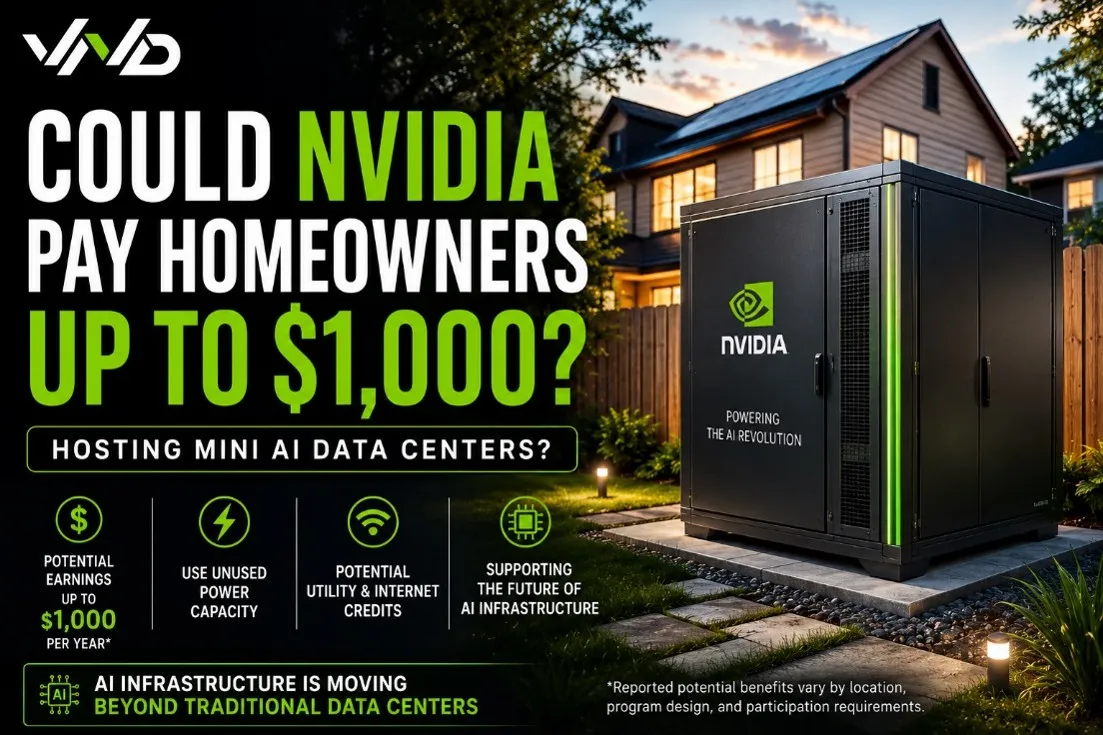
Imagine earning money or receiving utility credits simply by allowing a small AI-powered data center to operate beside your home. What sounds like a futuristic concept is now being explored as NVIDIA and energy technology company SPAN work on new approaches to supporting the growing demand for AI infrastructure.
As artificial intelligence continues to drive unprecedented demand for computing power, companies across the technology sector are searching for new ways to deploy AI infrastructure faster and more efficiently. One emerging concept involves placing compact AI computing nodes within residential communities, creating distributed networks that could supplement traditional data centers.
While the concept remains in its early stages, it has generated significant interest because it could potentially provide benefits to homeowners while helping address growing AI compute demands.
AI infrastructure demand is growing faster than traditional data center construction can keep pace. As organizations deploy artificial intelligence applications, cloud services, machine learning platforms, and AI agents, the industry is exploring new approaches to computing power, energy utilization, and distributed infrastructure.
What Is NVIDIA’s Backyard Data Center Concept?
The initiative centers around SPAN’s newly announced XFRA platform, a distributed computing solution designed to deploy compact, high-performance computing infrastructure closer to where power is already available.
Instead of relying exclusively on large-scale data centers that can take years to build and require substantial electrical infrastructure, distributed computing nodes could potentially be installed in residential communities and commercial locations.
According to SPAN, many modern homes have unused electrical capacity that may be able to support additional computing workloads. The company believes this approach could help reduce the gap between rapidly growing AI demand and the availability of new power infrastructure.
Could Homeowners Really Get Paid?
One of the most widely discussed aspects of the concept is the possibility that participating homeowners could receive compensation or incentives for hosting distributed AI infrastructure.
Potential benefits may include:
- Utility credits
- Reduced energy costs
- Internet service credits
- Direct financial compensation
According to various reports covering the initiative, potential benefits could approach $1,000 annually in certain scenarios. However, the exact compensation structure has not been publicly finalized.
Participation requirements, installation standards, compensation levels, and available incentives may vary significantly depending on location, utility providers, regulatory requirements, and the final design of any future program.
At this stage, no broadly available nationwide homeowner compensation program has been announced.
What’s Inside These Mini AI Data Centers?
The XFRA concept is designed to utilize enterprise-grade computing hardware, including NVIDIA GPUs and advanced server technologies capable of supporting demanding AI workloads.
These systems are intended to provide significant computing capacity while operating within compact enclosures suitable for deployment outside traditional data center environments.
If deployed at scale, thousands of distributed computing nodes could potentially function as a large decentralized AI infrastructure network rather than relying solely on centralized facilities.
Why NVIDIA and SPAN Are Exploring This Approach
The rapid growth of artificial intelligence has created enormous demand for data center capacity and electrical power.
Traditional data center projects often require years of planning, permitting, construction, and utility upgrades before becoming operational. As a result, technology companies are increasingly exploring alternative infrastructure models that could accelerate deployment.
Distributed computing represents one possible approach. By utilizing existing electrical capacity in residential and commercial environments, companies may be able to deploy additional AI infrastructure more quickly while reducing some of the challenges associated with large-scale construction projects.
Whether this model proves viable at scale remains to be seen, but it reflects the broader industry trend toward innovative infrastructure solutions for AI workloads.
Is It Already Happening?
Yes — at least on a small scale.
SPAN has announced the XFRA platform and has discussed plans to work with homebuilders and infrastructure partners to evaluate potential deployments. Early pilot initiatives are expected to focus on newly constructed communities where electrical infrastructure can be designed with these systems in mind.
However, the concept remains in the pilot and evaluation stage. It is not currently a widely available public program, and homeowners cannot broadly sign up nationwide at this time.
As testing continues, additional details regarding deployment models, regulatory approvals, compensation structures, and homeowner participation may become available.
Potential Challenges and Considerations
While the concept has attracted considerable attention, several questions remain:
- How much power would these systems consume?
- What maintenance responsibilities would exist?
- How would local regulations impact deployment?
- What cybersecurity protections would be required?
- How would homeowners be compensated?
- What effect, if any, would installations have on property values?
The answers to these questions will likely play a major role in determining whether distributed residential AI infrastructure can be adopted on a larger scale.
What This Means for the Hosting Industry
For NetServers, this development highlights how rapidly AI is transforming the hosting and data center industry. Whether AI workloads are processed in large enterprise data centers, dedicated hosting environments, or distributed edge-computing networks, businesses will continue to require reliable infrastructure, power planning, cybersecurity, and experienced hosting providers to support the next generation of AI applications.
Disclaimer
This article is based on publicly available reports and company announcements. Details such as compensation, availability, installation requirements, utility savings, and regulatory approvals may change as pilot programs evolve.
The Bottom Line
The idea of homeowners hosting small AI-powered computing infrastructure may sound unconventional today, but it reflects the growing urgency surrounding AI infrastructure expansion.
NVIDIA’s collaboration with SPAN demonstrates how the industry is exploring new ways to meet increasing demand for compute capacity and electrical power. While reports have discussed potential homeowner benefits that could approach $1,000 annually, the concept remains in its early stages and many details have yet to be finalized.
If future pilot programs prove successful, distributed AI infrastructure could become one of several approaches used to support the next generation of artificial intelligence services.
Source
SPAN Official Announcement
https://www.span.io/blog/span-announces-xfra-a-distributed-data-center-solution-to-close-the-speed-to-power-gap-for-ai-compute-demand